Best Snorkeling Spots in Caye Caulker, Belize — Ranked and Compared
The best snorkeling spots in Caye Caulker, Belize sit within a short boat ride of the village dock — and the range is remarkable for such a small island. Inside Hol Chan Marine Reserve you'll find nurse sharks resting on open sand, sea turtles on the coral heads, and eagle rays passing overhead. North of the village, manatees graze the seagrass in water so shallow you can almost stand. This guide ranks every major site and explains how to reach each one. For a guided tour that combines the top spots in a single morning or full day, browse caye caulker belize snorkeling tours to compare options.
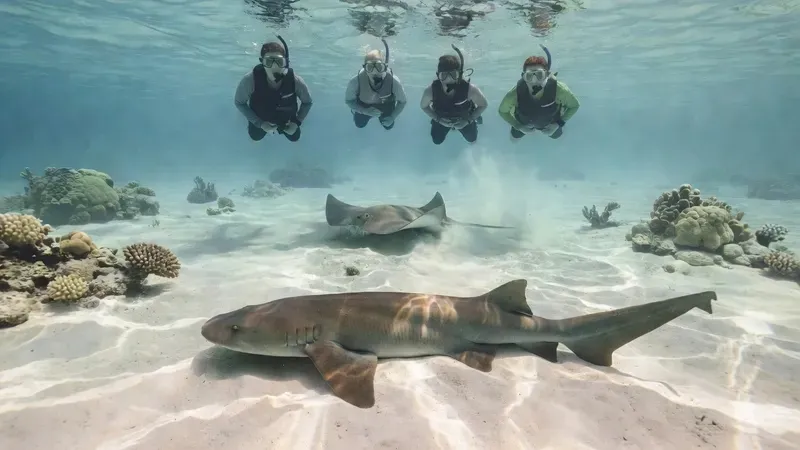
Hol Chan Marine Reserve's coral channel is home to more than 160 reef fish species and is consistently rated the top snorkel site in Belize.
Best Snorkeling Spots in Caye Caulker, Belize
At a Glance — All Seven Sites Compared
The table below covers every significant snorkel site reachable from Caye Caulker, ordered roughly by overall marine life density and visitor experience.
| Spot | What You See | Depth | Best For | How to Visit |
|---|---|---|---|---|
| Hol Chan Channel (Zone A) | 300+ fish species, sea turtles, nurse sharks, eagle rays | 3–9 m | Marine life variety, experienced snorkelers | Licensed guide required — included on all half/full-day tours |
| Shark Ray Alley (Zone D) | Nurse sharks, southern stingrays, tarpons | 3–5 m | Wildlife encounters, beginners | Licensed guide required — on most tours from Caye Caulker |
| Coral Gardens | Parrotfish, angelfish, blue tang, high coral cover | 1–3 m | Beginners, children, coral photography | Included on most half-day and full-day tours |
| North Channel / Manatee Zone | West Indian manatees, sea turtles, seagrass communities | 2–4 m | Manatee encounters — not guaranteed | Full-day tours only; some operators search this zone |
| Sunken Shipwreck | Encrusted wreck structure, schooling snapper, moray eels | 4–8 m | Wreck photography, intermediate snorkelers | Full-day tours (6+ hours) — not on half-day itineraries |
| Tarpon Cove / Tarpon Feeding | Giant tarpons (hand-feeding from boat) | Boat-side | Spectacle — feeding from the platform, not in the water | Included as a boat stop on most tours |
| South Channel | Mixed reef and sand, nurse sharks, reef fish | 3–6 m | Alternative to Shark Ray Alley; similar wildlife | Included on some half-day tours as a secondary reef stop |
Hol Chan Marine Reserve — The Crown Jewel
Hol Chan Marine Reserve covers about 18 square kilometers of reef, seagrass, and mangrove habitat south of San Pedro. Established in 1987 as Belize's first marine reserve, it protects the natural channel cut through the reef that gives the site its Maya name — "little channel."
Zone A (the channel itself) is the most species-rich snorkel site in Belize. The tidal current that flows through the gap concentrates nutrients and draws an extraordinary density of fish — parrotfish, snapper, grouper, queen angelfish, blue tang, and French angelfish in numbers you simply won't find at unprotected reef sections. Sea turtles are resident year-round, typically resting on coral heads or feeding in the seagrass fringing the channel edges.
Entry to Zone A requires a licensed guide and the payment of a reserve entrance fee (approximately US$10 per person, included in all tour prices). Independent snorkeling inside the reserve boundary is not permitted.
- Marine life: 160+ fish species, sea turtles, nurse sharks, eagle rays (seasonal), moray eels
- Depth: 3–9 m — accessible to all snorkel levels, deeper sections optional
- Best season: year-round; eagle rays most common October–April
- How to visit: included on every full-day tour from Caye Caulker; guide-required
Shark Ray Alley — Nurse Sharks and Stingrays
Shark Ray Alley (Hol Chan Zone D) is the most reliably thrilling site for first-time reef visitors. It's a sandy-bottomed channel where nurse sharks rest in groups of 5 to 15 on the bottom and southern stingrays cruise the flats — both completely habituated to snorkelers after decades of boat traffic.
The nurse sharks here are large (typically 1–2.5 m) and docile. They will approach snorkelers out of curiosity but pose no meaningful risk when the guide's instructions are followed — keep still, don't reach down, and avoid trapping them between your body and the bottom. Stingrays in the open water column are equally safe; their defensive barb only activates under pressure, not when they're free-swimming.
For a deeper look at this site — including safety facts and the full history of how the shark habit formed — read our guide to shark ray alley caye caulker.
- Marine life: nurse sharks, southern stingrays, tarpons (feeding stop nearby)
- Depth: 3–5 m over open sand
- Best season: year-round — sharks and rays present in all months
- How to visit: included on half-day and full-day tours; licensed guide required inside Zone D
Coral Gardens — Best for Beginners and Families
Coral Gardens is the shallowest and most sheltered of the main snorkel sites — depth ranges from about 1 to 3 meters, the current is light, and the coral formations are dense and close to the surface. It's the most visually colourful stop on most itineraries: brain coral, star coral, sea fans, and staghorn colonies interspersed with schools of blue tang, parrotfish in their vivid blues and greens, and pairs of French angelfish.
Because the depth is so manageable, beginners and children who are just getting comfortable with a snorkel mask typically have their best experience here. There are no strong currents and no large animals to keep track of — just coral and fish in every direction.
- Marine life: blue tang, parrotfish, French and queen angelfish, snapper, trumpetfish
- Depth: 1–3 m — ideal for beginners and children
- Best season: year-round; clearest visibility in the dry season (November–April)
- How to visit: included on nearly every half-day and full-day tour from Caye Caulker
North Channel / Manatee Zone — For a Quieter Encounter
North of Caye Caulker village, an extensive seagrass meadow in the North Channel serves as a year-round feeding ground for West Indian manatees. These are large, slow-moving marine mammals — adults reach 2.5 to 3 meters and approach snorkelers with calm curiosity when undisturbed.
Sightings are real but not guaranteed. Manatees are wide-ranging animals and their daily location depends on tides, water temperature, and recent boat traffic in the channel. Tours that include a manatee zone search typically spend 20–30 minutes drifting slowly through the seagrass in hopes of an encounter. On a good day, you'll have a manatee glide past at close range; on a quieter day, you might see one surfacing in the distance. Either way, the seagrass zone itself has sea turtles as a reliable fallback.
- Marine life: West Indian manatees (not guaranteed), sea turtles, southern stingrays in the seagrass
- Depth: 2–4 m over dense seagrass bottom
- How to visit: full-day tours only (6+ hours); not on standard half-day itineraries
How to Visit Each Snorkeling Spot
By Guided Tour vs Going Solo
The most important practical point: Hol Chan Marine Reserve (Zones A, B, C, and D) is a protected area where independent snorkeling is not permitted. All visitors must enter with a licensed guide and pay the reserve entrance fee. This applies to Shark Ray Alley, the Hol Chan Channel, and the seagrass manatee zone inside the reserve boundary.
The exception is Coral Gardens — some parts of the reef south of the village can be accessed independently by strong swimmers, though the exact boundary isn't always clear from the water. For any visitor unfamiliar with local conditions, a guided tour is the safer and more productive option regardless of the legal requirement.
Solo snorkeling from the beach directly in front of Caye Caulker village is possible in shallow areas near the split and the dock, but the marine life here is a fraction of what's available at the reserve sites. If you've come to Caye Caulker for the reef, book a tour.
- Hol Chan Zone A, B, C, D — licensed guide required; no independent access permitted
- Coral Gardens — accessible independently by confident swimmers; visibility of boundary uncertain
- From the beach (village front) — shallow, calm, but limited marine life compared to the reserve
Best Time of Day to Snorkel
Morning departures (typically 9:00–10:30 am) offer the best conditions at most sites. Winds are light, visibility is at its clearest before afternoon surface chop develops, and you beat the rush of other tour boats that crowd the most popular sites like Shark Ray Alley from mid-morning onward.
The dry season from approximately November through April brings the most reliably calm conditions and clearest visibility. The wet season (May–October) brings warmer water and lush mangrove vegetation but afternoon squalls and slightly reduced reef visibility are more common. Even in the wet season, morning snorkel tours almost always run successfully — afternoon conditions are more variable.
- Ideal: morning departure, dry season (November–April)
- Good: morning departure, wet season (May–October) — most mornings are calm
- Avoid: afternoon in wet season if you're prone to seasickness or prioritize visibility
What to Bring
All snorkel gear (mask, fins, snorkel, flotation belt) is provided by every licensed tour operator. Beyond the gear, a few items make the difference between a comfortable experience and a forgettable one.
- Biodegradable, reef-safe mineral sunscreen — chemical sunscreen (oxybenzone, octinoxate) is prohibited inside Hol Chan Marine Reserve and harms coral; mineral zinc oxide is the standard
- UV rash guard or long-sleeved swim shirt — the Caribbean sun at this latitude is intense; wearing a rash guard beats repeated sunscreen applications
- Reusable water bottle — stay hydrated before entering the water; most tours provide drinks but having your own is sensible
- Your own SD card — most tours include GoPro coverage but guides don't carry blank cards; if you want footage, bring a compatible card
- Cash (BZ$ or USD) — tipping guides is standard (10% is typical) and appreciated; some small purchases on the island are cash-only
Best Snorkeling Spots Caye Caulker — Frequently Asked Questions
What is the best snorkeling spot in Caye Caulker?
Hol Chan Marine Reserve (Zone A — the channel) is consistently the top-rated snorkeling spot for sheer marine life variety — over 160 fish species, sea turtles, nurse sharks, and eagle rays in one protected channel. Shark Ray Alley (Zone D, same reserve) is the best single-wildlife encounter for nurse sharks and stingrays. For first-timers and families, Coral Gardens is the most approachable site.
Can you snorkel independently in Caye Caulker?
Not inside Hol Chan Marine Reserve — licensed guides are required for all four zones (Shark Ray Alley, the channel, seagrass beds, and mangroves). The shallow reef directly off the village beach can be reached independently, but the marine life there is considerably less impressive than the reserve sites. For the spots this guide covers, book a snorkeling in caye caulker belize tour.
Which snorkeling spot has the most marine life?
Hol Chan Channel (Zone A) has the highest documented species richness of any site near Caye Caulker — more than 160 fish species have been recorded inside the reserve. The channel's tidal current concentrates nutrients and fish in a compact area. It is only accessible on full-day tours (6 hours), not half-day itineraries.
Is Coral Gardens or Hol Chan better?
They serve different needs. Coral Gardens is shallower (1–3 m), calmer, and better for beginners, children, and close-up coral photography. Hol Chan Channel (Zone A) is deeper (3–9 m), more current-exposed, and far richer in large marine life — sea turtles, nurse sharks, big schools of fish. If you can only visit one, Hol Chan Channel is the more memorable wildlife experience for confident swimmers. Both sites are worth visiting if your tour covers them.
What snorkeling spot has the best visibility?
Hol Chan Channel typically has the clearest water of the main sites — the tidal current flushes suspended particles through the gap, leaving good to excellent visibility most of the year (commonly 10–20 m in the dry season). Coral Gardens and Shark Ray Alley follow closely. Visibility at all sites can drop after heavy rain or strong southwest winds; morning conditions are almost always better than afternoon.