Caye Caulker Snorkeling Travel Guide
Caye Caulker sits five miles from the Hol Chan Marine Reserve and the most famous snorkeling spots on the entire Mesoamerican Barrier Reef — the world's second largest barrier reef system, stretching 600 miles from Mexico's Yucatán Peninsula to Honduras. The reef shelters six distinct snorkeling sites within a short speedboat ride of the island, each offering a different slice of Belize's extraordinary marine life. Here is what you'll find at each one.
| Spot | Distance from Caye Caulker | Depth | What You'll See | Best For |
|---|
| Hol Chan Channel (Zone A) | 5 miles SE | 20–40 ft | Turtles, parrotfish, moray eels, coral | All skill levels |
| Shark Ray Alley (Zone D) | 5 miles SE | 10–15 ft (shallow) | Nurse sharks, southern stingrays | Thrill-seekers & beginners |
| Coral Gardens | South of Caye Caulker | 12–25 ft | Eagle rays, lobsters, seahorses, brain coral | Reef explorers |
| South Channel | 1–2 miles SE | 10–20 ft | Coral heads, nurse sharks, reef fish | Half-day tours |
| North Channel | Between islands | 20–35 ft | Manatees, sea turtles, eagle rays | Manatee seekers |
| Tarpon Cove | Behind Caye Caulker | Shallow | Giant tarpons (hand-feeding), iguanas | Families & kids |
| Sunken Barge / Shipwreck | Near reef | 20–30 ft | Coral-encrusted wreck, reef fish, lobsters | Explorers & photographers |
Hol Chan Marine Reserve — Belize's Crown Jewel for Snorkeling
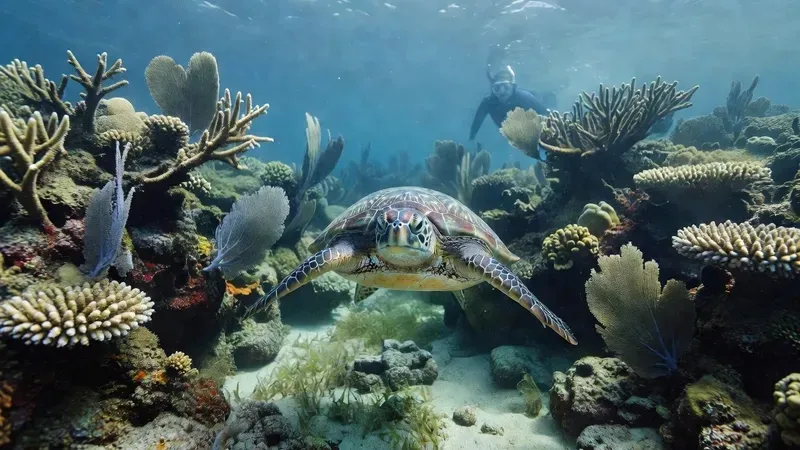
Hol Chan Marine Reserve — "little channel" in Mayan — is Belize's oldest marine protected area, established in 1987 and covering 4.4 square miles of reef, seagrass, and mangrove habitat. Zone A, the channel itself, is the site that every caye caulker snorkeling tour includes: a natural cut through the reef where currents and nutrients combine to produce extraordinary biodiversity. Over 300 species of fish have been recorded inside the reserve, alongside eight sea turtle species, bull sharks, spotted eagle rays, and dense stands of brain coral, elkhorn coral, and sea fans that have been growing undisturbed for more than 30 years.
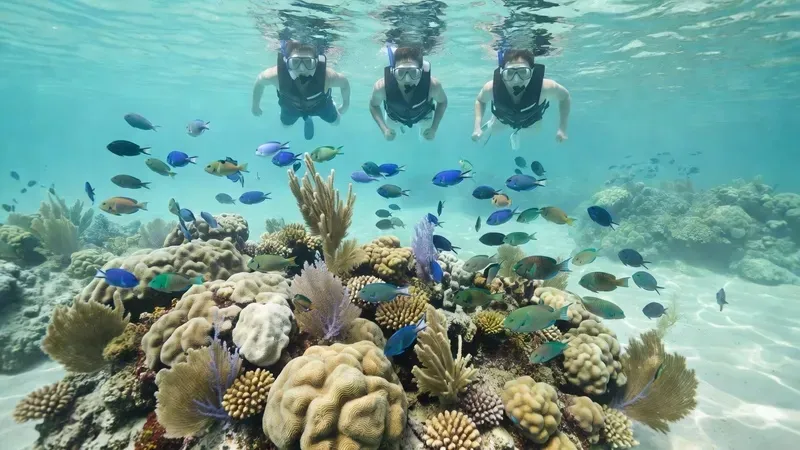
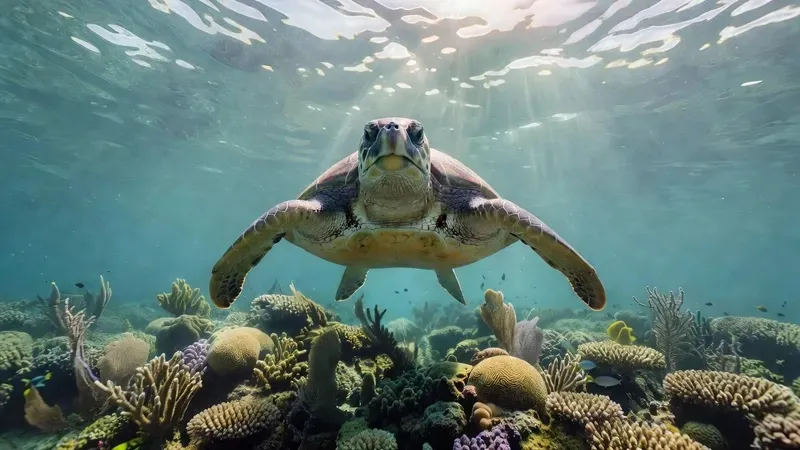
Visibility in the Hol Chan Channel reaches 30 feet or more on calm days from December through May. The current running through the cut makes snorkeling feel effortless — you drift with the flow rather than swimming hard, arriving at coral formations populated by green sea turtles, southern stingrays, and swirling schools of sergeant majors, blue tangs, and parrotfish.
- Best caye caulker snorkeling experience: drift-snorkeling through the channel at slack tide
- Sea turtles are reliable year-round — green turtles graze the seagrass beds in Zone B daily
- Reserve entrance fee ($12.50 USD) is included in all tour prices listed above
- Guides are mandatory inside the reserve — solo entry without a licensed guide is not permitted
Shark Ray Alley — Nurse Sharks and Stingrays Up Close
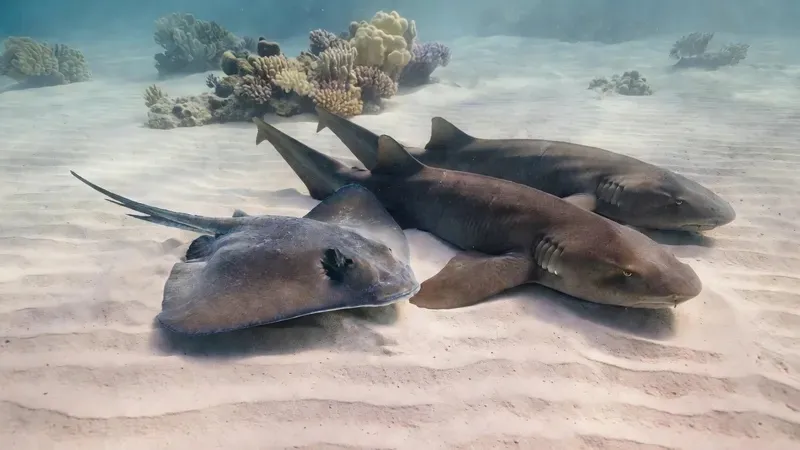
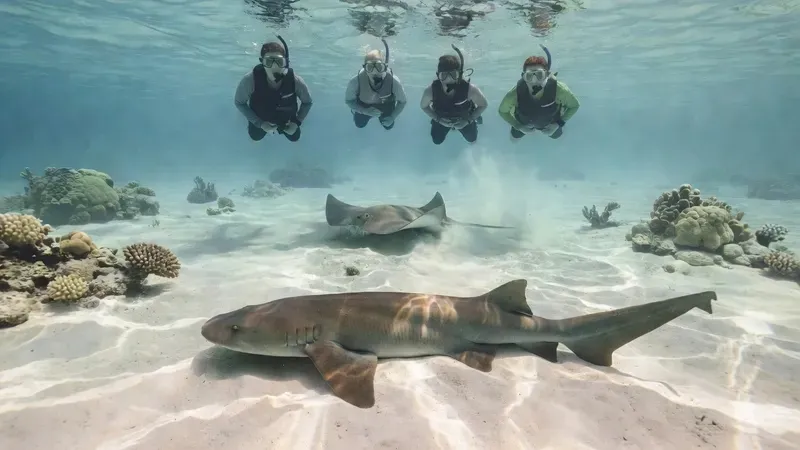
Shark Ray Alley (Zone D of Hol Chan Marine Reserve) is the most photographed snorkel site on the Belize Barrier Reef — and for good reason. Nurse sharks and southern stingrays gather here daily in extraordinary concentrations, drawn by the same scent cues local fishing boats created decades ago. Today the site is fully protected; the animals arrive through habit.
The sharks and rays at Shark Ray Alley arrive in extraordinary concentrations. These are friendly nurse sharks — non-aggressive, bottom-dwelling animals with no cutting teeth — ranging from 3 to 9 feet and resting on the sandy floor in 10 to 15 feet of water, close enough to see every detail. Guides position you directly above them. Southern stingrays glide in groups of three to ten, their flat forms ghosting through the sandy shallows. This is the stop on every caye caulker snorkeling tour that produces the most gasps.
- Depth at Shark Ray Alley: 10–15 feet — ideal for beginner snorkelers
- Nurse sharks are harmless: bottom-dwelling, slow-moving, not interested in swimmers
- Do not touch or chase marine life — it is illegal inside the reserve and disturbs the animals
- Best visibility: December through May; morning departures get the clearest water before boat traffic builds
Coral Gardens, North Channel, and the Other Caye Caulker Snorkel Spots
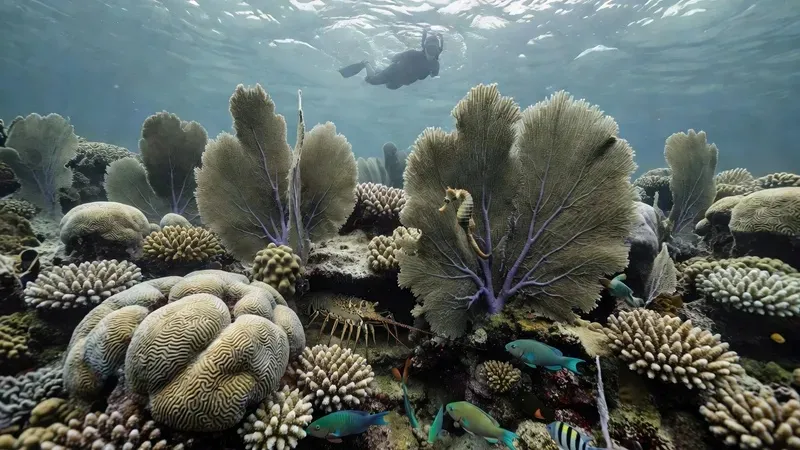
Coral Gardens sits in the calm, sheltered waters south and west of Caye Caulker, protected from the open-ocean swell that builds on the barrier reef's exposed eastern face. The reef here is a dense mosaic of brain coral, star coral, and towering sea fans rising to within six feet of the surface. Spotted eagle rays are frequently seen gliding through the sandy channels between coral heads. Stingrays and turtles are also regular Coral Gardens visitors — turtles particularly favour the seagrass patches at the reef edge. Seahorses cling to sea fans at 12 to 18 feet. Lobsters shelter under overhangs at every depth.
The North Channel — between Caye Caulker and Ambergris Caye — is where full-day tours go to search for West Indian manatees. The seagrass beds here are a protected manatee zone, and sightings occur on the majority of full-day tours. Manatees here are used to snorkelers and often approach within arm's length — one of the true bucket list wildlife encounters in the entire Caribbean. Tarpon Cove, tucked behind the island of Caye Caulker, is the hand-feeding stop where guides let you feed the fish directly from the boat rail: giant tarpons that can exceed four feet leap from the water to take fish scraps, often inches from outstretched hands. Caye Caulker runs on island time, and nowhere captures that vibe better than drifting in the calm water behind the reef, rum punch in hand, watching tarpons surge past.
- Coral Gardens: best spot for seahorses, lobsters, and spotted eagle rays
- North Channel: highest probability for West Indian manatee encounters — full-day tours only
- Tarpon feeding: included on nearly all tours — tarpons are harmless but large and exciting
- South Channel: the closest snorkel site to Caye Caulker, used on half-day tours
Half-Day vs Full-Day Caye Caulker Snorkel Tour — Which Should You Book?
The key difference between a half-day snorkel tour in Caye Caulker and a full-day tour is not just time — it is which sites you can reach. Half-day tours (3–3.5 hours) cover South Channel, Shark Ray Alley, and Coral Gardens from a single boat, returning by midday. Full-day tours (6–7.5 hours) add Hol Chan Channel, the manatee zone in the North Channel, a shipwreck, tarpon feeding, and often a break for lunch at a local restaurant.
Manatee encounters only happen on full-day tours — the North Channel manatee zone is too far for the half-day turnaround. Our full half-day vs full-day comparison works through the price-per-hour math and who each format suits.
| Half-Day (3–3.5 hrs) | Full-Day (6–7.5 hrs) |
|---|
| Price | $55–$75 per person | $108–$130 per person |
| Stops | 3 snorkel stops | 5–7 stops |
| Shark Ray Alley | ✓ Yes | ✓ Yes |
| Hol Chan Channel | Some tours only | ✓ Yes — guided drift |
| Coral Gardens | ✓ Yes | ✓ Yes |
| Manatee chance | ✗ Not included | ✓ High (North Channel stop) |
| Shipwreck | ✗ No | ✓ Most full-day tours |
| Lunch | Not included | Included |
| GoPro footage | Included on most | Included |
| Best for | Short trips, return visitors | First-timers, wildlife lovers |
Snorkeling vs Scuba Dive Options in Caye Caulker — What to Know
Caye Caulker is equally famous as a scuba dive destination as it is a snorkel destination — the same reef sites that make caye caulker snorkeling so good are even more dramatic on a scuba dive. The Hol Chan Channel has a full scuba dive programme, and the Great Blue Hole (a world-famous UNESCO underwater sinkhole 70 miles offshore) is accessed via live-aboard dive trips. For non-certified visitors, introductory scuba dive courses are available from several island operators, typically lasting half a day with a pool session followed by a shallow dive.
For most visitors, snorkeling is the better choice: it covers the same wildlife-rich reef stops (Shark Ray Alley, Hol Chan, Coral Gardens) at a fraction of the cost, with no certification required. Nurse sharks and sea turtles come within arm's length of snorkelers just as readily as divers. Only the shipwreck and deeper coral walls reward the extra depth that a scuba dive provides.
- Snorkeling covers all the top wildlife sites at Hol Chan, Shark Ray Alley & Coral Gardens
- Scuba diving opens up deeper walls, the shipwreck, and the Great Blue Hole day trip
- Intro scuba dive: available on Caye Caulker for non-certified divers, half-day, no prior experience needed
- For most first-time visitors: start with a snorkel tour — it's more accessible and covers the same highlights
What to Bring Snorkeling in Caye Caulker — Practical Tips
Every snorkel tour in Caye Caulker provides a mask, fins, snorkel, and life jacket. What you bring makes the difference between comfort and regret. Biodegradable, reef-safe sunscreen (zinc or titanium oxide only) is required by Belizean law inside Hol Chan Marine Reserve — chemical sunscreens bleach coral and are confiscated at the reserve entrance. A rash guard or UV swim shirt is equally important: you spend much of a 6-hour tour face-down in the water with your back exposed to intense equatorial sun. Most first-timers who skip it get a painful stripe of sunburn across their lower back.
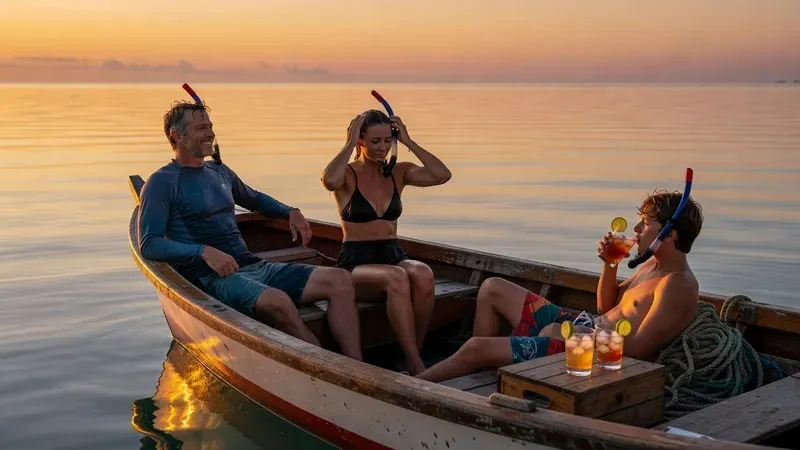
Cash in US dollars is useful for guide gratuity (10% is standard for a good guide), drinks at lunch stops on full-day tours, and optional upgrades. Rum punch is the traditional end-of-snorkel celebration on nearly every tour — Belizean rum punch has a certain warmth to it that pairs well with a sunset over the reef.
- Required: reef-safe mineral sunscreen (zinc or titanium only — chemical sunscreen is prohibited inside Hol Chan)
- Essential: rash guard or UV swim shirt — Caribbean sun is intense, back exposure during snorkeling is severe
- Useful: dry bag for phone and wallet on board the speedboat
- Useful: cash USD for guide tip (10% is standard) and optional upgrades
- Skip: your own snorkel fins — all tours supply high-quality gear, no need to pack heavy
- Skip: a GoPro — most full-day tours include their own GoPro footage at no extra cost
- Getting here: most visitors fly into Belize City and take a water taxi to Caye Caulker (45 min, ~$25 USD). The island runs on golf carts — no cars — which sets the pace for any visit to Belize
 from $110