Caye Caulker Snorkeling — What to Expect on Your Tour
If you are trying to figure out caye caulker snorkeling what to expect before you commit to a booking, this is the guide you need. I have been leading snorkel tours from this island for 12 years and I have answered every version of this question: how long is the boat ride, will I see sharks, is it tiring, what do I wear, what if I get seasick. The answers below are based on how tours actually run in practice, not how the brochure describes them. To compare which specific tours operate on Caye Caulker, see the full list of snorkeling tours in caye caulker.
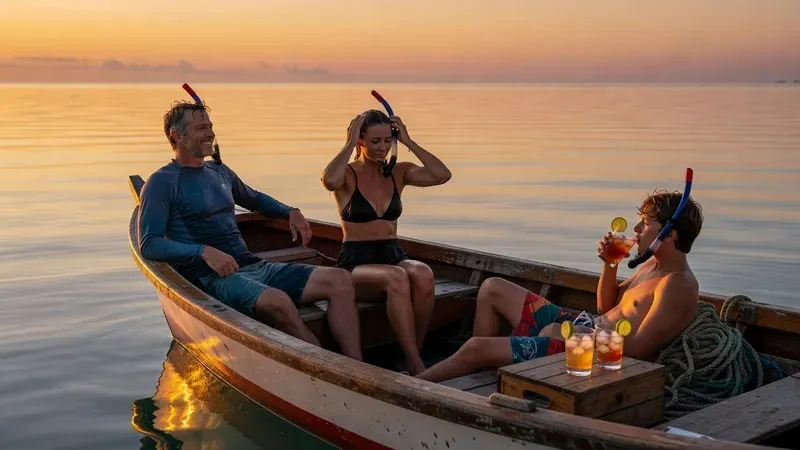
Caye Caulker Snorkeling — A Full Day, Step by Step
Full-day tours run approximately 6 to 7.5 hours from dock departure to return. The timeline below reflects a typical full-day itinerary — half-day tours cover fewer stops and run roughly 3 to 3.5 hours.
| Time | What Happens |
|---|---|
| 8:30 am | Arrive at the tour operator's dock; sign waiver, collect snorkel mask and fins, apply reef-safe sunscreen before boarding |
| 9:00 am | Depart from Caye Caulker dock; guide delivers safety briefing on the boat during the ride to the first site |
| 9:30 am | First snorkeling stop — typically South Channel or Hol Chan Channel; approximately 20–40 minutes in the water |
| 10:30 am | Shark Ray Alley; guide enters first, group follows; approximately 20–30 minutes with nurse sharks and southern stingrays |
| 11:00 am | Tarpon feeding stop (on most full-day tours); guide supplies small fish pieces, tarpons leap from the surface |
| 12:00 pm | Lunch — either served on the boat or at a dock stop in San Pedro; typically rice, beans, grilled fish or chicken |
| 1:30 pm | Coral Gardens snorkeling stop; slow drift above dense coral formations, eagle rays and reef fish; approximately 30–40 minutes |
| 2:30 pm | Manatee zone — guides search the seagrass beds; sighting is not guaranteed but common on calm days |
| 3:00–3:30 pm | Return to Caye Caulker dock; gear collected, tour concludes |
On the Boat — What to Expect
Caye Caulker snorkel tours use open speedboats — fibreglass centre-console or panga-style vessels with bench seating along the sides. These are working boats, not party catamarans. They are fast, practical, and give everyone a clear view of the water.
The rides between snorkel stops are typically 10 to 20 minutes. At speed, open water crossings can feel rough if there is any chop — the boat skips across the waves and you will feel it through the bench. Sun exposure during rides is significant. Life jackets are available on every reputable tour; your guide will tell you the rules for each site (some sites require life jackets, others leave it to your comfort level). The guide delivers a safety briefing before each stop, covering the site conditions, what to expect in the water, and any specific rules.
In the Water — Your First Snorkel Stop
Your guide will demonstrate how to adjust the mask seal and clear water from the snorkel before anyone enters the water — pay attention to this even if you have snorkeled before, because different masks have different seal characteristics. The guide enters first and positions in the water, then signals for the group to enter from the boat ladder.
Visibility on the Belize Barrier Reef on a typical morning ranges from approximately 30 to 60 feet. The water is warm — 78 to 84°F depending on the season — and clear enough that you can see the reef below before you enter. Within the first five minutes you will typically see parrotfish, blue tangs, sergeant majors, and several species of wrasse. Each stop runs approximately 20 to 45 minutes. You are free to float, explore, and surface for breaks whenever you need to — you are not required to stay submerged the whole time.
The Marine Life — What You'll Actually See
This is where I want to be honest rather than oversell. Here is what you can realistically expect on a full-day tour.
- Nurse sharks at Shark Ray Alley: nearly guaranteed — the animals are year-round residents and present on the vast majority of tour days
- Sea turtles: very likely on a full-day tour — green and loggerhead turtles are frequently seen at reef and seagrass sites; not guaranteed at any specific stop but common across the full itinerary
- Manatees: likely but not guaranteed — guides check the seagrass beds where manatees feed; sightings depend on tide, wind, and where the animals have moved; expect a genuine search, not a guaranteed encounter
- Southern stingrays: common at Shark Ray Alley; usually multiple animals present alongside the nurse sharks
- Spotted eagle rays: seen regularly at Coral Gardens and on open-water crossings; not guaranteed but a common sighting on full-day tours
- Tarpon: very common at the dedicated tarpon feeding stop; multiple large silver fish are typically present
- Reef fish (parrotfish, angelfish, tangs, wrasse, triggerfish): essentially guaranteed at every stop — the reef is extremely rich in common species
- Seahorses: present at Coral Gardens but small and easily missed; ask your guide to point them out
What About Seasickness?
I will not pretend seasickness is not a factor. Open speedboats in choppy water can produce genuine nausea, particularly on the longer rides between sites. December to May is the calmest period in Belize — the trade winds are lighter and the sea state is typically smoother. June to November can bring stronger afternoon swells, though mornings are usually calmer regardless of season; our month-by-month conditions guide breaks down the sea state for every month.
If you are prone to seasickness: eat a light breakfast rather than skipping food entirely (an empty stomach actually makes nausea worse), sit toward the front of the boat where the ride is stiffer but the fresh air is best, and take an over-the-counter seasickness tablet such as Dramamine or Bonine the night before and again the morning of the tour. If you feel unwell during the trip, tell your guide immediately — they can adjust where you sit and slow down between sites if conditions allow. Do not wait until you are severely nauseous to mention it.
Practical Things to Know Before You Go
| Question | Answer |
|---|---|
| How far from shore are the snorkel sites? | Approximately 5 to 20 minutes by speedboat depending on the site |
| What is the water temperature? | 78 to 84°F (26 to 29°C) year-round — no wetsuit needed |
| How deep is the water at each stop? | 10 to 40 feet depending on the site; Shark Ray Alley is 10–15 ft, Coral Gardens 12–25 ft |
| Is snorkeling physically tiring? | No — a life jacket or buoyancy vest keeps you afloat effortlessly; snorkeling is very low-effort |
| What if I am not a confident swimmer? | Guides provide extra flotation for less confident swimmers; tell your operator when booking; see our non-swimmers and kids guide |
| Can children come? | Most tours accept children from age 4; the private full-day Hol Chan snorkel tour is most flexible for families with young children |
| Cash or card? | Cash is preferred for tips (guides work hard and tips are appreciated) and for lunch extras; most tours accept card for the booking itself |
What to Wear and Bring
The single most important item is reef-safe sunscreen — standard sunscreen contains oxybenzone and octinoxate which damage coral reefs, and Belize's marine reserve rules require reef-safe alternatives. Apply it 20 to 30 minutes before entering the water so it absorbs into your skin rather than washing straight off.
A rash guard or lightweight long-sleeve swim shirt protects your back from sun exposure during the float stops — the Caribbean sun is intense and you may not feel it when you are focused on what is below you. Dry bags are useful for phones and any valuables you want on the boat. Water shoes are optional and generally not needed on these tours.
Leave jewellery and anything you cannot afford to lose at your hotel. Most tour operators provide snorkel masks and fins, but if you are a frequent snorkeler with your own mask, bringing it is worthwhile — a familiar fit makes a real difference. Do not bring your own fins if you are flying with luggage limits — the tour fins will be adequate. If the tour description says GoPro footage is included, you likely do not need to bring your own camera.
Frequently Asked Questions
Is caye caulker snorkeling good for beginners?
Yes, it is well-suited for beginners. The snorkel sites in the Hol Chan Marine Reserve are at manageable depths, guides are in the water with the group at every stop, life jackets and flotation devices are available, and the water is warm and generally calm — especially on morning tours and during the December to May dry season. No prior experience is required.
How long is a typical snorkel tour in Caye Caulker?
Half-day tours run approximately 3 to 3.5 hours and cover 3 stops. Full-day tours run approximately 6 to 7.5 hours and cover 5 to 7 stops including a lunch break. The half-day is a solid introduction; the full-day gives you time at more sites and the chance to see manatees, which requires a longer trip to the seagrass zones.
Will I definitely see nurse sharks?
Nurse sharks at Shark Ray Alley are year-round residents and present on the great majority of tour days. Most guides describe sightings as nearly guaranteed. The only scenarios that might prevent the encounter are weather severe enough to cancel the tour entirely, or a very rare day when the animals have moved out of the site temporarily.
Is the water cold?
No. The Caribbean water around Caye Caulker ranges from approximately 78°F (26°C) in the cooler months (January to March) to 84°F (29°C) at the peak of summer. No wetsuit is needed for snorkeling. A rash guard is useful for sun protection, not warmth.
What happens if the weather is bad?
Reputable operators will reschedule or cancel if conditions are genuinely unsafe — strong wind, high seas, or storms. Belize has a dry season (December to May) where cancellations are rare, and a wetter season (June to November) where occasional afternoon squalls can affect late-day departures. Morning tours are the safest bet year-round. If a tour is cancelled, operators typically offer a rescheduled date or a full refund.