Coral Gardens Caye Caulker, Belize — A Snorkeler's Guide to the Site
Of all the stops on a Caye Caulker snorkeling itinerary, coral gardens caye caulker belize is often the one people remember most. Shark Ray Alley gets the headlines, but Coral Gardens delivers a quieter, more intimate encounter with the reef itself — dense formations, unusual species, and the kind of slow-drift snorkeling that lets you actually look at things rather than just float past them. This guide covers what the site is, what lives there, how it compares to Hol Chan, and which tours stop here. To compare the full list of options, browse snorkeling tours in caye caulker.
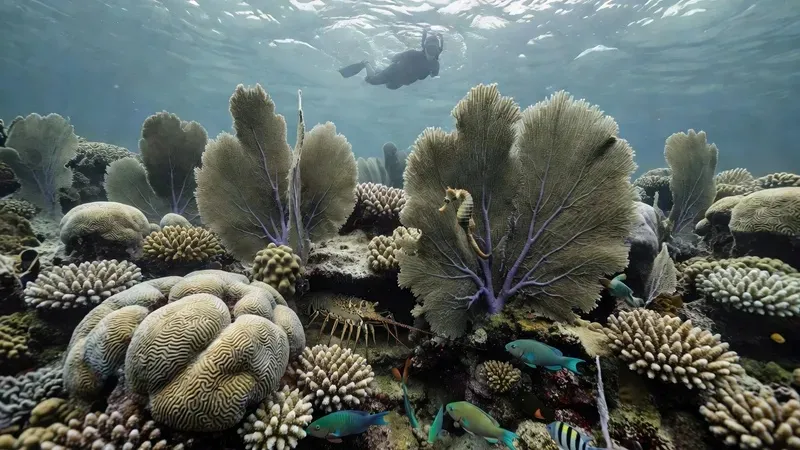
Coral Gardens, Caye Caulker — What Is It?
Coral Gardens is a designated snorkeling site within the Hol Chan Marine Reserve zone, located in sheltered water on the leeward side of the reef south of Caye Caulker. The site sits at approximately 12 to 25 feet deep depending on tide and exact position, which makes it accessible for snorkelers of almost any experience level — the shallower sections are reachable with your face barely below the surface.
The reef structure here is dense and complex. Brain corals the size of car tyres sit alongside star coral colonies, sea fans waving in the gentle current, and patches of elkhorn coral in the shallower zones. Because the site is partially sheltered from the prevailing easterly swell, visibility is often better here than at more exposed sites on the outer reef — typically 30 to 60 feet on a calm morning. That clarity is why photographers and videographers consistently rate it as one of their favourite stops.
Marine Life at Coral Gardens
The species list at Coral Gardens is long relative to the time most tours spend here. The variety comes from the structural complexity of the reef — more hiding places means more species present at any given moment.
- Spotted eagle rays — often seen gliding slowly over the sandy channels between coral heads
- Seahorses — small and easily missed, usually anchored to sea fans or soft coral; ask your guide to point them out
- Caribbean spiny lobsters — tucked under coral ledges, especially in the deeper sections
- Parrotfish — common, large, and noisy as they scrape algae from coral surfaces
- Blue tangs — schooling fish that move in loose groups through the mid-water column
- Trumpetfish — long, thin, and surprisingly well-camouflaged against gorgonians
- Moray eels — green and spotted morays rest in crevices; reef-safe to observe from 2–3 feet away
- Queen and French angelfish — slow-moving and photogenic, often near brain coral
- Juvenile reef fish — the dense coral gives juvenile squirrelfish, damselfish, and wrasse a sheltered nursery ground
- Nurse sharks — occasionally present in the sandy channels, especially at dawn and dusk
| Species | Where at Coral Gardens | Depth | How Common |
|---|---|---|---|
| Spotted eagle rays | Sandy channels between coral heads | 15–25 ft | Common |
| Seahorses | Anchored to sea fans and soft coral | 10–20 ft | Uncommon — look closely |
| Spiny lobsters | Under coral ledges | 18–25 ft | Common at dusk |
| Parrotfish | Open reef surface | 8–20 ft | Very common |
| Blue tangs | Mid-water column | 5–20 ft | Very common |
| Trumpetfish | Near gorgonians, vertical hover | 10–20 ft | Common |
| Moray eels | Crevices and holes in coral | 10–25 ft | Common |
| Angelfish (queen/French) | Near brain coral | 10–20 ft | Common |
| Nurse sharks | Sandy floor channels | 15–25 ft | Occasional |
Coral Gardens vs Hol Chan Marine Reserve — What's the Difference?
Coral Gardens and Hol Chan are both within the Hol Chan Marine Reserve boundary, but they feel like different places. Hol Chan refers specifically to the channel cut through the reef crest — a deeper, more current-swept passage where large pelagic species move through. You can see bigger schools of fish at Hol Chan, grouper of substantial size, and the occasional bull shark or lemon shark passing through. The current inside the channel can be strong, and guide supervision inside the reserve zone is mandatory.
Coral Gardens by contrast has almost no current on calm days, which makes it ideal for slow drift snorkeling and for anyone who wants time to stop, hover, and photograph without fighting the water. The biodiversity is different rather than lesser — seahorses, eagle rays, and the sheer density of coral growth are Coral Gardens' strengths. Hol Chan has stronger biological drama; Coral Gardens has better conditions for deliberate, unhurried observation.
For most first-time snorkelers, Coral Gardens is the more comfortable and often the more rewarding stop. For experienced snorkelers who want current and bigger marine encounters, Hol Chan Channel is the draw.
How to Snorkel Coral Gardens — What to Know
Coral Gardens is only accessible by boat — there is no shore entry from Caye Caulker. All tours that include the site handle the boat transfer as part of the itinerary. The ride from the Caye Caulker dock typically takes 10 to 20 minutes depending on conditions and the route.
At the site, most tours offer a free-swim period of approximately 20 to 40 minutes. Your guide will enter the water first, establish a reference position, and signal when it is safe to enter from the boat ladder. The current at Coral Gardens typically runs south to north along the reef face on incoming tides — your guide will account for this when positioning the boat. For photographers, mornings before 11 am produce the best light angle into the water, and the site is noticeably less crowded in the first 90 minutes of the tour day before other boats arrive.
Which Tours Include Coral Gardens?
Coral Gardens appears on most Caye Caulker snorkeling itineraries because it pairs well with Shark Ray Alley — the two sites are close together and operators can cover both in a single morning or afternoon.
Anda de Wata Tours, the half-day marine reserve snorkeling tour, explicitly lists Coral Gardens as one of three stops on their half-day marine reserve tour, alongside South Channel and Shark Ray Alley. At $55 per person it is the most budget-friendly route to the site. The tour runs approximately 3 hours with flexible start times adjusted for weather and tides.
Bleasean Sea Escapes, the half-day marine reserve snorkeling adventure, includes Coral Gardens in their half-day marine reserve adventure — a 3.5-hour small-group tour (max 10 people) that also covers Shark and Ray Alley and the South Channel. The intimate group size makes the Coral Gardens stop particularly good for photography and for spotting smaller species like seahorses.
Full-day tours from Salt Life Eco Tours, the 7-stop snorkeling trip in the Belize Barrier Reef, and Blackhawk Tours Ltd., the Hol Chan snorkel adventure, also include Coral Gardens as part of multi-stop itineraries. These longer tours give you 20 to 40 minutes at each site rather than rushing through. The Bleasean half-day snorkeling tour with sunset cruise stops at Coral Gardens in the afternoon when the low sun angle creates rich colours in the shallow coral heads.
For a side-by-side comparison of all tours and which stops each one covers, see the caye caulker snorkeling trips overview on the homepage.
Frequently Asked Questions
What marine life can I see at Coral Gardens Caye Caulker?
Coral Gardens hosts spotted eagle rays, Caribbean spiny lobsters, seahorses, parrotfish, blue tangs, trumpetfish, moray eels, queen and French angelfish, and a wide variety of juvenile reef fish. Nurse sharks are occasionally seen resting in the sandy channels. The dense coral structure — brain coral, star coral, sea fans, and elkhorn — is itself a highlight.
Is Coral Gardens or Shark Ray Alley better?
They are different experiences rather than one being better than the other. Shark Ray Alley is an open sandy area with concentrated nurse sharks and southern stingrays in close proximity — high energy and excellent for wildlife interaction. Coral Gardens is calmer, richer in reef structure, and better for photographers and anyone who prefers a slower, more observational snorkel. Most tours include both.
How long do tours spend at Coral Gardens?
Most tours allocate approximately 20 to 40 minutes at Coral Gardens. Half-day tours at the shorter end, full-day tours at the longer end. If your priority is maximising time at this specific site, look for a full-day tour or ask your operator how long they typically spend there.
What depth is Coral Gardens?
Coral Gardens ranges from approximately 12 feet in the shallower sections to about 25 feet at the deeper coral heads. The shallow zones are accessible to complete beginners who are comfortable floating face-down, while the deeper sections reward experienced snorkelers who can free-dive a few feet below the surface.
Are there sharks at Coral Gardens?
Nurse sharks are occasionally present in the sandy channels at Coral Gardens, particularly early in the morning. However, Coral Gardens is not the primary shark site on Caye Caulker snorkeling tours — that distinction belongs to Shark Ray Alley. If swimming with nurse sharks is your main goal, Shark Ray Alley is the more reliable stop.